PROJECT 01
Outdoor-UGV
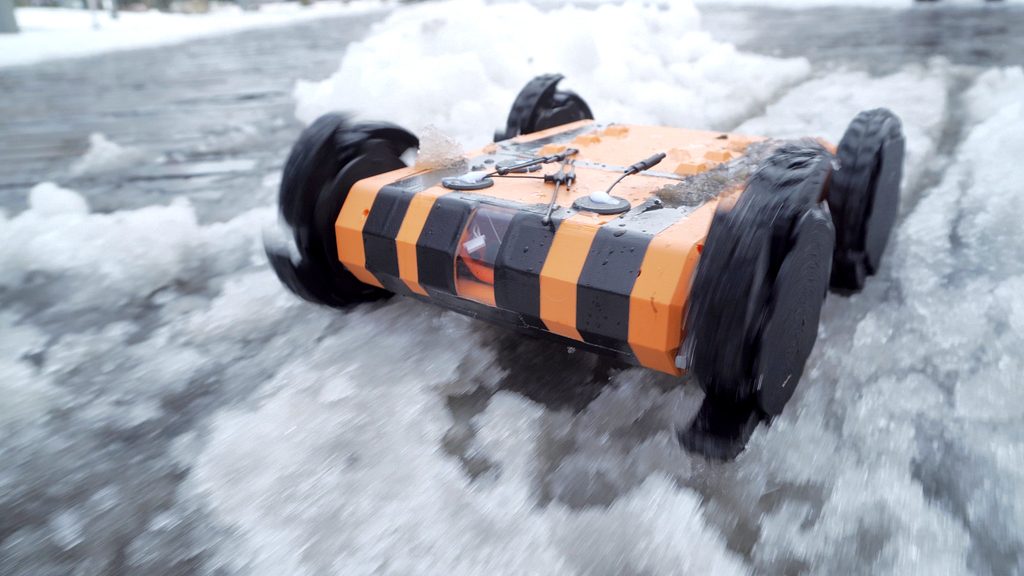
The OUTDOOR-UGV is a fully 3D-printed unmanned ground vehicle designed around three simple principles: easy to manufacture, easy to repair and cost-effective to build.
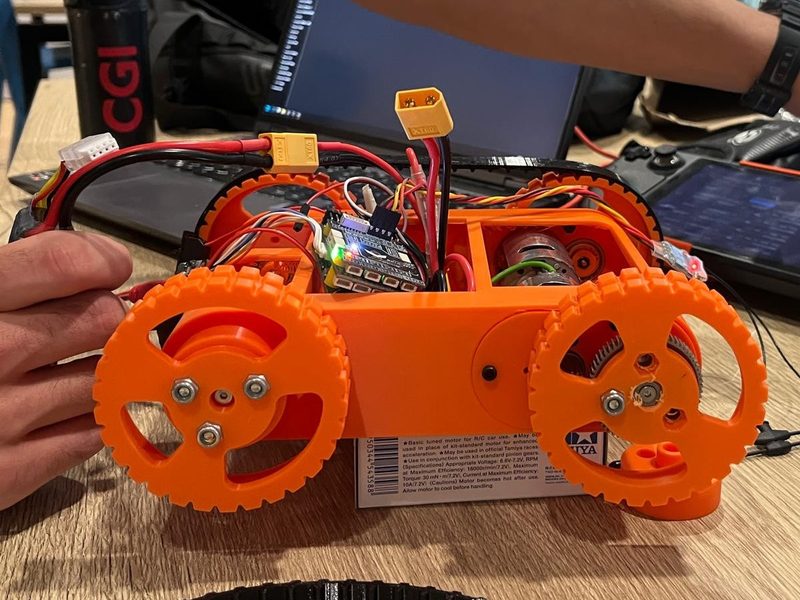
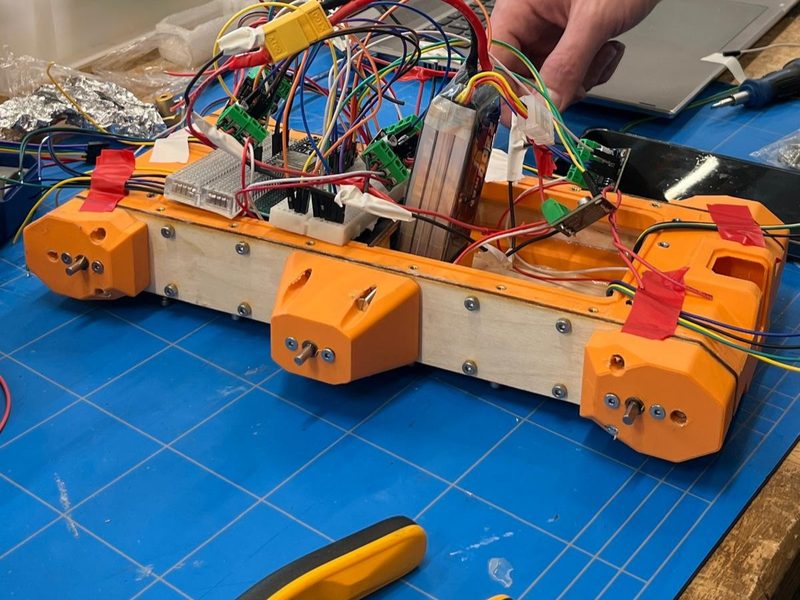
The platform combines a rigid 3D-printed body with custom electronics, internal wiring and software, all designed to create a modular and accessible robotic system using standardized components.
Throughout the project, we developed and explored multiple locomotion configurations, including deployable claw wheels for challenging terrain, tracks for increased traction and a floating wheel for crossing water.
The OUTDOOR-UGV turned out to be a development platform for testing how far rapid iteration, additive manufacturing and modular design can take a robotic system. And, of course, a few things had to break before we figured that out.
ACHIEVED
Milestones
DEPLOYABLE CLAW WHEEL
Locomotion Innovation
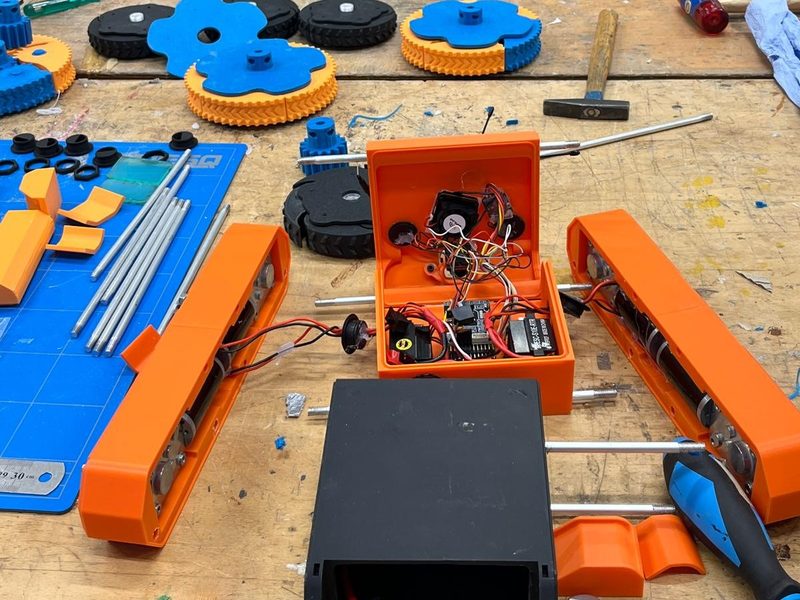
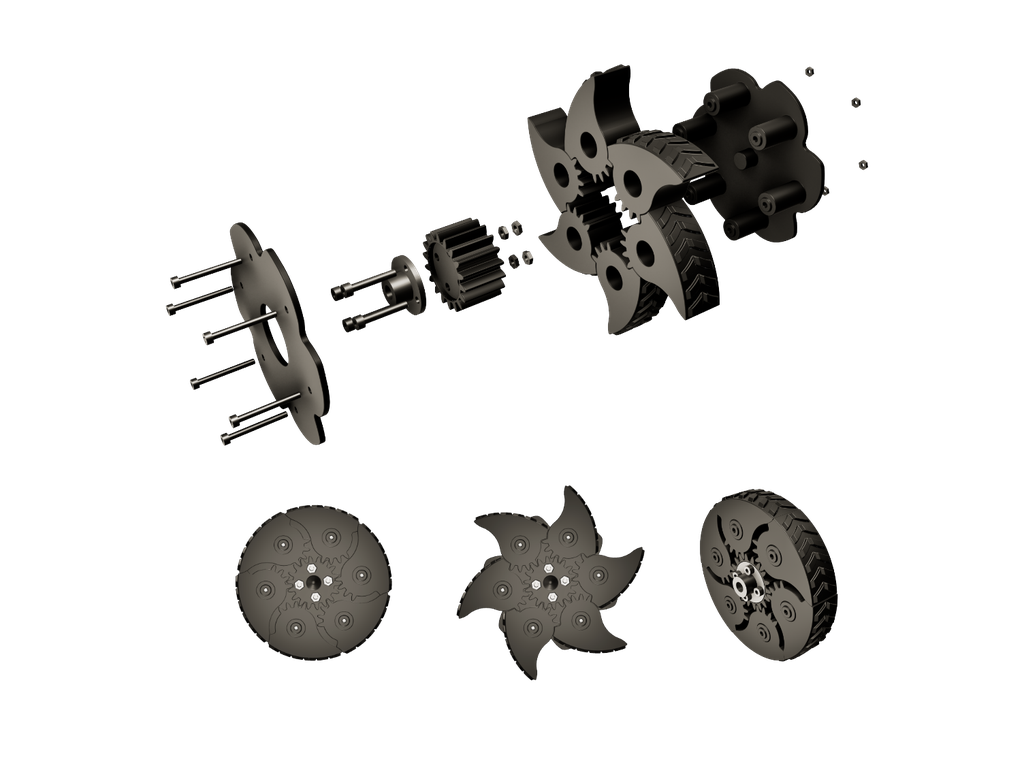
The deployable claw is designed to adapt its behaviour based on the direction of rotation. When driven in one direction, the wheel remains closed. Reverse the drive direction, and the claws deploy to create grip when the terrain demands it.
The system is almost entirely 3D-printed, except the connection between the wheel and the motor axis. We initially tried to keep that part printed too, but during testing, we found that the printed connection wasn't strong enough to survive repeated loads in real environments.
The first broke almost instantly. The second simply didn't work. The third made it into the field before failing. The fourth survived long enough to reveal a new set of problems after extended use. The fifth one worked.
The deployable claw wheel is a good example of how rapid iteration and real-world testing can turn a concept into a practical solution.
FUTURE
Next Steps
Our next steps focus on further developing both the hardware and software while improving the platform's environmental protection from IP54 towards IP65.
We are also continuing to explore where the platform can provide real value. The UGV was initially developed as a flexible experimental platform, but its capabilities have opened up a wider range of potential applications. We're continuing to investigate where a compact, modular robotic platform can make a meaningful difference.